Free Shipping on Orders $75+  •  GMP Certified  •  Made in the USA
HomeBlogShould Runners Take Creatine?
Performance

Should Runners Take Creatine?

By PureNutri-Care Editorial Team Updated Jun 23, 2026 8 min read
Runner taking sugar-free creatine monohydrate gummies during training

Key Takeaways

Creatine has a reputation as a "muscle" supplement — something for lifters and bodybuilders, not for people who run. So if you run 5Ks, marathons, or trail ultras, it is fair to ask whether creatine has anything to offer you at all. The short answer: yes, most runners and endurance athletes can benefit from creatine, just not in the way they might expect.

Creatine will not turn you into a faster steady-state aerobic engine. What it does is sharpen the high-intensity moments hidden inside endurance sport — and speed up how you recover between hard sessions. Here is the honest breakdown.

Should runners take creatine?

For most runners, creatine is worth considering. It is not a classic endurance aid like carbohydrate or iron, but it supports three things that matter to nearly every runner: recovery between hard sessions, the ability to repeat high-intensity efforts, and power for sprints and surges.

If your training is purely easy-paced long mileage, the benefit is smaller. But almost no real training plan is purely easy — intervals, hill repeats, tempo surges, and race-day kicks all draw on the exact energy system creatine supports.

How does creatine help an endurance athlete?

Creatine helps your muscles rapidly regenerate ATP, the molecule used for short, powerful bursts of effort. That makes it most useful in the explosive moments of an otherwise aerobic sport.

BenefitWhat it means for a runner
Repeated high effortsStronger, more consistent interval and hill repeats in a single session
Sprint finishMore power for the final kick and mid-race surges
RecoveryFaster muscle recovery between hard workouts, so you train better the next day
Strength & injury resilienceSupports strength work, which protects against running injuries over a season
Glycogen storageMay help muscles store a little more glycogen alongside carbohydrate

If you are new to the supplement entirely, our creatine for beginners guide walks through the basics before you start.

Will creatine make me heavier and slower?

This is the biggest fear runners have, and it deserves an honest answer. Creatine does often cause a small increase in body weight — typically around 1–2 kg (2–4 lb) in the first weeks. The key point: most of that early weight is water drawn into your muscle cells, not fat.

For a powerlifter that water is irrelevant. For a runner carrying it over 26.2 miles, it is a fair concern. But in practice, a few things soften it:

If you are an elite marathoner chasing every gram of efficiency, you might time creatine to your strength-focused base phase rather than peak race weeks. For everyone else, the trade-off is usually worth it.

How should a runner take creatine?

Keep it simple. A low daily dose is all you need.

  1. Take 3–5 g of creatine monohydrate every day. No loading phase is required — loading just saturates your muscles a little faster.
  2. Be consistent. Creatine works by building up in your muscles over a few weeks of daily use, so the every-day habit matters more than exact timing.
  3. Take it whenever you will remember — morning, after a run, or with a meal. Pairing it with a daily habit helps.

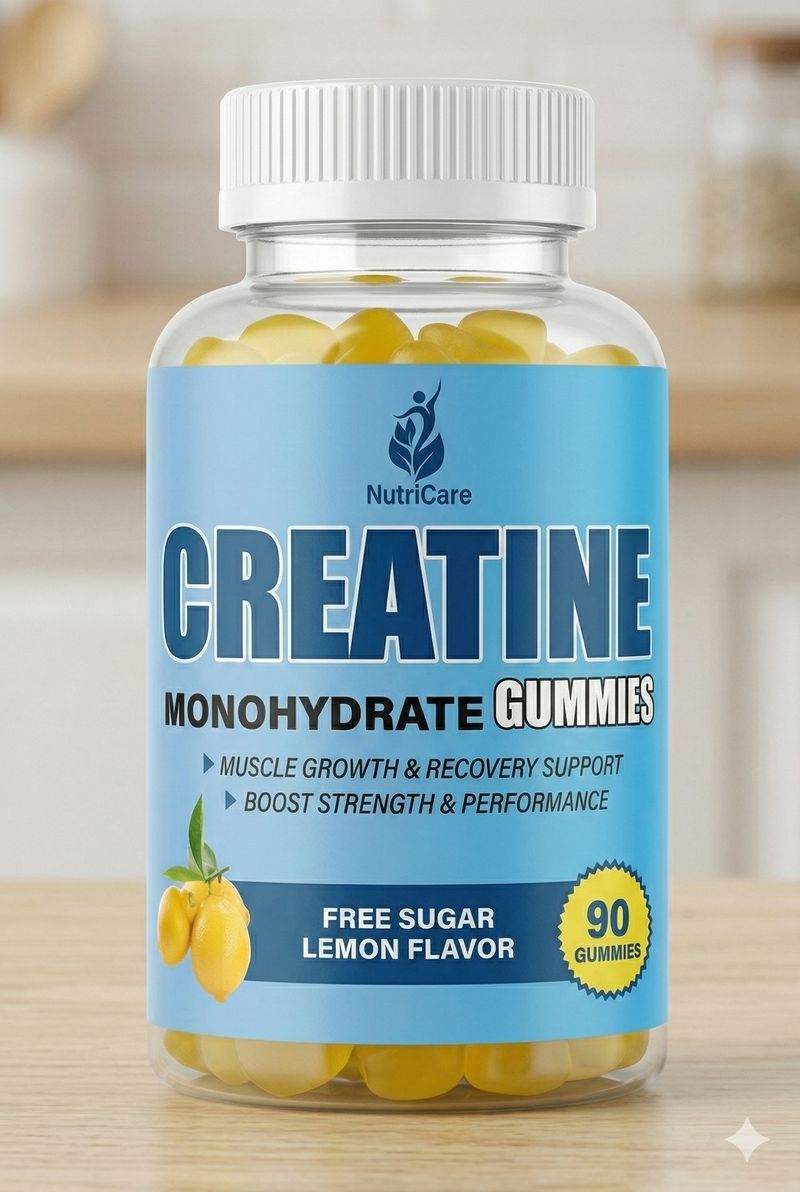
For a full timing breakdown, see how to take creatine gummies. Our creatine monohydrate gummies deliver 5 g per four gummies, are sugar-free and vegan, and skip the shaker bottle — handy when you are heading out the door for a session.

Does the form matter — powder vs gummies?

The active ingredient is the same: creatine monohydrate. Gummies simply remove friction. There is no mixing, no chalky aftertaste, and nothing to forget at home — which for runners juggling early sessions and busy schedules makes daily consistency far easier. And because they can be sugar-free, they fit low-sugar and most fueling plans without adding carbs you did not plan for.

Is creatine safe for runners?

Creatine monohydrate is one of the most studied supplements in sports nutrition and has a strong safety record in healthy adults. The most common side effect is the mild water-weight gain described above. Staying well hydrated is sensible for any runner anyway.

If you have a kidney condition, are pregnant or nursing, or take regular medication, talk to your doctor before starting — and that advice holds for any new supplement, not just creatine.

The bottom line

Creatine is not just for lifters. For runners and endurance athletes, it sharpens the hard efforts inside your training, speeds recovery between sessions, and powers your finish — at the cost of a small, mostly water-based weight change that most runners find well worth it. A simple 3–5 g daily dose, taken consistently, is all it takes.

NutriCare Creatine Monohydrate Gummies

The Delicious Way to Build Muscle — sugar-free, vegan, made in the USA. From $39.99.

See the gummies →

Frequently Asked Questions

Should runners take creatine?
Most runners can benefit. Creatine helps with recovery between hard sessions, repeated high-intensity efforts like intervals and hill repeats, and the power for a sprint finish. It does not improve steady aerobic pace directly, but those high-intensity moments appear in nearly every training plan.
Does creatine make you slower or heavier?
Creatine can cause a small weight increase of roughly 1–2 kg early on, but most of that is water stored inside the muscle, not fat. It usually stabilizes after a few weeks, and for most runners the recovery and power benefits outweigh the modest weight change.
How much creatine should an endurance athlete take?
A daily dose of 3–5 g of creatine monohydrate is enough. No loading phase is needed. Consistency matters most, because creatine builds up in your muscles over a few weeks of daily use.
When should runners take creatine?
Timing is flexible. Take it whenever you will remember it consistently — morning, after a run, or with a meal. Daily intake matters far more than the exact time of day.
Is creatine safe for runners long-term?
Creatine monohydrate has a strong long-term safety record in healthy adults and is one of the most researched supplements available. If you have a kidney condition, are pregnant or nursing, or take medication, check with your doctor first.

Sources & Further Reading

Disclaimer: This article is for general informational purposes only and is not medical advice. Dietary supplements are not intended to diagnose, treat, cure, or prevent any disease. Consult a qualified healthcare provider before starting any supplement, especially if you are pregnant, nursing, taking medication, or have a medical condition.