Sugar-Free Apple Cider Vinegar Gummies: A Practical Guide
Key Takeaways
- Many popular ACV gummies contain 2-4g of added sugar per serving — small per gummy, but it adds up across a daily routine.
- Sugar-free apple cider vinegar gummies use sweeteners like maltitol, stevia, or monk fruit instead of cane sugar or glucose syrup.
- Lower sugar is gentler on teeth and daily carb counts, which matters for keto, low-sugar, and fasting routines.
- If you are managing blood sugar or diabetes, always check the full label and talk to your doctor — "sugar-free" is not the same as "carb-free."
- Sugar-free gummies still deliver acetic acid with the mother, so you are not trading away the part of ACV people actually want.
Apple cider vinegar gummies solved the biggest problem with liquid ACV: the harsh taste and the sting on your throat and teeth. But in fixing the taste, a lot of brands quietly created a new one — added sugar. If you are buying gummies to support a low-sugar, keto, or fasting routine, the sugar content on the back of the bottle deserves a close look.
Here is what "sugar-free" actually means on an ACV gummy, why it matters more than the marketing on the front, and how to choose without overthinking it.
How much sugar is in regular ACV gummies?
It varies, but many of the best-known apple cider vinegar gummies contain roughly 2 to 4 grams of added sugar per serving, usually as cane sugar, glucose syrup, or tapioca syrup used to make the gummy taste good and hold its texture. On its own, two grams sounds trivial. The issue is the routine: a gummy is something you take every single day, sometimes twice. Over a week that is a steady, repeated dose of added sugar you did not really sign up for.
For most people that small amount is not a health emergency. But it works directly against the reasons many people reach for ACV in the first place — a low-sugar lifestyle, keto, or a clean fasting window. That is the gap sugar-free gummies are built to close.
What does "sugar-free" actually mean on the label?
In the United States, "sugar-free" is a regulated claim — it generally means less than 0.5g of sugar per serving. Instead of cane sugar, sugar-free apple cider vinegar gummies are sweetened with alternatives such as:
- Sugar alcohols (maltitol, xylitol, erythritol) — sweet, with little to no impact on blood sugar for most people.
- Stevia — a plant-derived, zero-calorie sweetener.
- Monk fruit — another natural, zero-sugar option.
One honest note: "sugar-free" is not the same as "zero carbohydrate." Sugar alcohols still contribute some carbs, and the gummy base itself has a little. If you count every gram, read the full nutrition panel rather than trusting the headline.
Sugar-free vs. regular ACV gummies: a quick comparison
| Sugar-Free ACV Gummies | Typical "Regular" ACV Gummies | |
|---|---|---|
| Added sugar | Under 0.5g per serving | About 2-4g per serving |
| Sweetener | Stevia, monk fruit, sugar alcohols | Cane sugar, glucose/tapioca syrup |
| Keto / low-sugar fit | Generally suitable | Adds daily sugar |
| Fasting-friendliness | Friendlier (minimal sugar) | Sugar may matter to strict fasters |
| Teeth | Less sugar feeding bacteria | More sugar in repeated contact |
| ACV content | Still with the mother | Usually with the mother |
The thing to notice: choosing sugar-free does not mean giving up the actual apple cider vinegar. A good sugar-free apple cider vinegar gummy still delivers acetic acid from ACV that includes the mother — the cloudy strands of beneficial compounds people look for. You are cutting the sugar, not the substance.
Are sugar-free ACV gummies good for people with diabetes?
This is where honesty matters most. Lower-sugar gummies are an obviously sensible choice if you are watching blood sugar — but a supplement label is not medical advice, and we are not going to pretend otherwise.
A few realistic points:
- "Sugar-free" reduces added sugar, but the product still contains some carbohydrates from sugar alcohols and the gummy base.
- Some research has looked at vinegar and post-meal blood sugar, but results are modest and individual — gummies are not a treatment for diabetes and should never replace prescribed care.
- Sugar alcohols can cause digestive upset in larger amounts, which is worth knowing if you take several gummies a day.
If you have diabetes or prediabetes, talk to your doctor or pharmacist before adding any ACV product — especially because vinegar may interact with certain blood-sugar and diuretic medications. A two-minute conversation is the responsible move.
Are sugar-free gummies better for your teeth?
Gummies are already much gentler on enamel than swigging liquid vinegar, because you are not bathing your teeth in straight acid. Cutting the sugar removes a second factor: sugar is what oral bacteria feed on to produce the acids that cause decay. So a sugar-free gummy is friendlier on two fronts. It is still smart to rinse with water afterward and not brush immediately, since any acidic food slightly softens enamel for a short window. We cover this fully in our guide on whether ACV gummies are bad for your teeth.
How to choose a sugar-free ACV gummy
Skip the front-of-bottle marketing and check four things on the back:
- Added sugar: aim for under 1g — ideally 0g.
- ACV potency: look for a clear milligram amount of apple cider vinegar per serving, with the mother.
- Sweetener type: stevia and monk fruit are popular natural choices; check for sugar alcohols if those bother your stomach.
- Testing and sourcing: third-party testing and clear made-in-USA, vegan labeling are good signs of a brand that is not hiding anything.
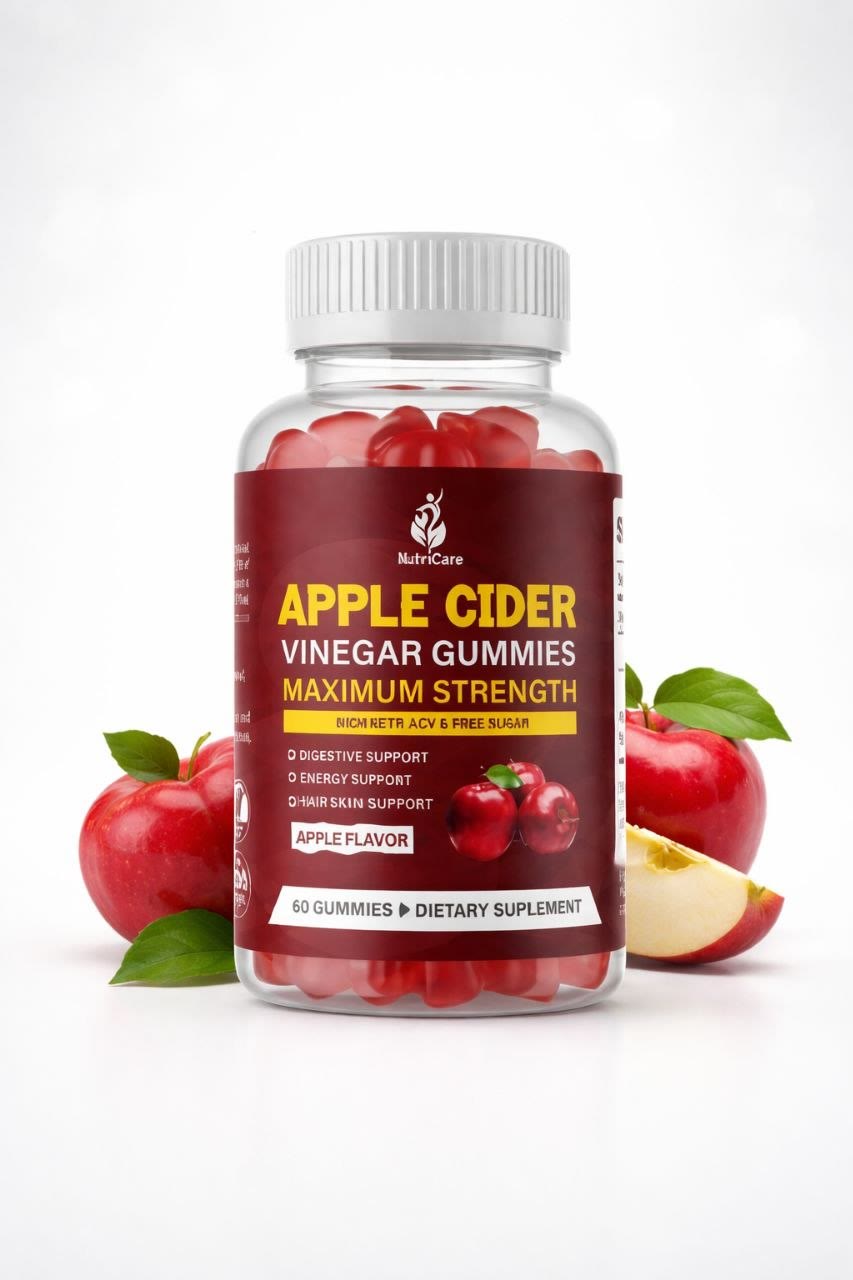
Our apple cider vinegar gummies are sugar-free, vegan, made in the USA, and made with the mother — built specifically so the gummy does not undo your low-sugar routine. If you want the full criteria, see our buyer's guide to the best ACV gummies.
Why does the added sugar add up if it's only 2 grams?
This is the part the front of the bottle never explains. Two grams of sugar in a single gummy genuinely is small — about half a teaspoon. The problem is not the dose; it is the pattern. Supplements are designed to be taken every day, indefinitely. That is the whole point of a routine product.
Run the math on a two-gummy serving carrying 4 grams of added sugar. Over a week that is 28 grams. Over a month it is roughly 120 grams — close to half a cup of sugar — coming purely from the supplement you took to support a healthier routine. None of it shows up in your meals, your coffee, or your snacks, so it is easy to miss entirely. For someone deliberately keeping daily added sugar low, that hidden stream is exactly the thing they were trying to avoid. A near-zero-sugar gummy makes the number you can ignore actually ignorable.
Does sugar-free taste worse?
A fair question, because the original reason gummies exist is taste. The honest answer: modern sugar-free sweeteners have closed most of the gap. Stevia and monk fruit can carry a faint aftertaste that some people notice and others do not, and a good formulator blends them to minimize it. For the vast majority of people, a well-made sugar-free apple cider vinegar gummy still tastes like a pleasant fruit chew — which is the whole reason to choose a gummy over liquid in the first place. You are not trading taste for principle; you are mostly just trading the sugar.
Who should care most about sugar-free ACV gummies?
Not everyone needs to obsess over a couple of grams. But for some people the sugar line is the single most important number on the label:
- People on keto or low-carb diets — where even a few grams of sugar can interrupt the routine they are working to maintain.
- People who fast — since sugar can trigger an insulin response that matters during a fasting window. We cover this in can you take ACV while fasting.
- Anyone watching blood sugar — including those managing diabetes or prediabetes, with their doctor's guidance.
- Parents and dentists' regulars — anyone trying to cut the daily sugar load for dental reasons.
If none of those describe you, a small amount of sugar is unlikely to matter much. But if even one does, sugar-free is the obvious, low-effort upgrade — same ACV, same convenience, without the part that fights your goal.
The bottom line
Sugar-free apple cider vinegar gummies exist because the convenience of a gummy should not come with a daily dose of added sugar. They keep what people actually want from ACV — acetic acid with the mother, in a pre-measured, throat- and teeth-friendly form — while fitting low-sugar, keto, and fasting routines. Read the full label, manage your expectations (this is a wellness supplement, not a medication), and if blood sugar is a concern, loop in your doctor first.
NutriCare Apple Cider Vinegar Gummies
Daily Wellness in Every Gummy — sugar-free, vegan, made in the USA. From $29.99.
See the gummies →