How Long Does Creatine Stay in Your System?
Key Takeaways
- A single dose of creatine clears from your bloodstream within roughly 24 hours, but that is not the number that matters.
- Your muscle creatine stores take about 4 to 6 weeks to fully deplete back to baseline if you stop taking it.
- Because stores fade gradually, the benefits do not vanish overnight — but they do fade, which is why daily use is recommended.
- There is no need to cycle creatine; staying topped up with a small daily dose keeps your muscles saturated continuously.
- Missing a single day is not a disaster — your levels barely move — but long breaks let your stores drift back down.
"How long does creatine stay in your system?" sounds like one question, but it is really two. There is the creatine circulating in your blood after a dose, and there is the creatine stored inside your muscles. They have very different timelines — and the second one is what actually matters for results.
Here is the full picture, plus what it means for how you should take creatine day to day.
How long does a single dose of creatine last?
After you take creatine, the amount circulating in your bloodstream peaks within an hour or two and is largely cleared within about a day. Creatine that your muscles do not absorb is converted to creatinine and excreted by your kidneys. So in terms of the blood, a single dose is mostly gone within roughly 24 hours.
If you stopped here, you might think creatine is short-lived. But the supplement is not really about what is in your blood — it is about what is stored in your muscle, and that lasts far longer.
How long does creatine stay stored in your muscles?
This is the number that counts. When you take creatine consistently, your muscles build up a reserve. If you then stop completely, those stores drain back to your natural baseline over approximately 4 to 6 weeks. It is a slow, gradual decline, not a sudden drop.
That slow washout is good news in two ways. First, missing the occasional day barely changes your levels. Second, it confirms why a steady daily habit works so well — you are simply keeping a reservoir topped up rather than refilling it from empty.
| What you are measuring | Timeline |
|---|---|
| Creatine in your bloodstream (single dose) | Cleared in about 24 hours |
| Time to saturate muscles (daily dosing) | About 3 to 4 weeks at 3 to 5 g/day |
| Time to deplete muscle stores (after stopping) | About 4 to 6 weeks |
| Effect of missing one day | Negligible |
How long until creatine starts working?
Filling your muscle stores is the mirror image of emptying them. Taking a standard 3 to 5 grams per day, most people reach full saturation in about three to four weeks. A loading phase (larger doses for the first several days) can saturate faster, but it is optional — steady daily dosing gets you there without the higher upfront amount.
For a deeper look at timing and whether to load, see our guide on the best time to take creatine.
Why this supports continuous daily use
Put the two timelines together and the strategy is obvious. It takes weeks to fill your muscles and weeks for them to empty, so the smart move is to keep a small daily dose flowing rather than starting and stopping. Continuous use means your muscles stay saturated and you stay at peak benefit all the time.
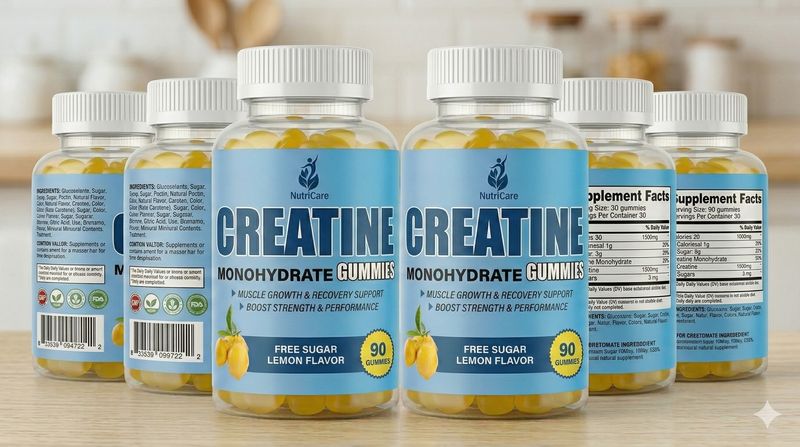
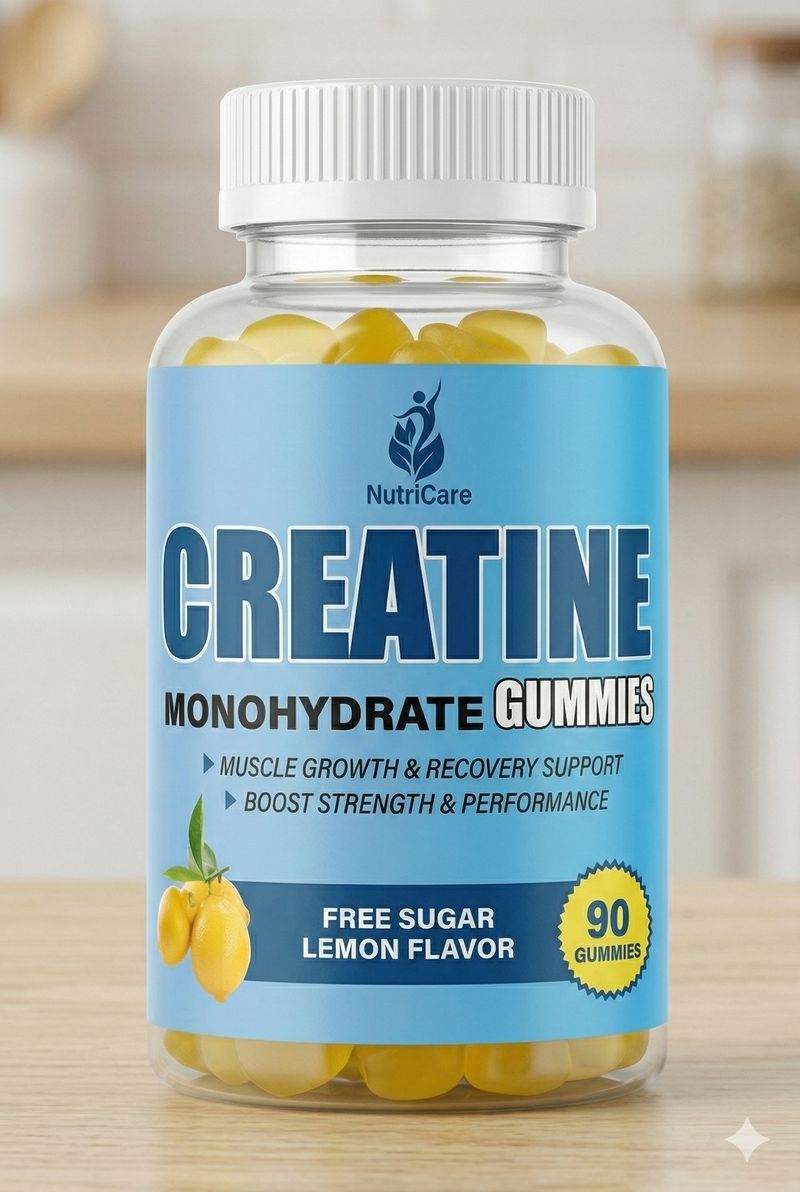
This is exactly why creatine monohydrate gummies suit the routine so well: a fixed daily serving you can take anywhere, without a shaker or measuring. The easier the habit, the more reliably your stores stay full.
Do you need to cycle creatine?
No. Unlike some supplements, creatine does not require cycling on and off. There is no evidence that your body "gets used to it" or that you need breaks to keep it effective. Cycling off simply lets your stores drain over those 4 to 6 weeks, after which you have to spend weeks re-saturating. For most people, continuous use is the simpler and more effective approach.
What happens if you stop taking creatine?
If you stop, nothing dramatic happens. Your muscle stores gradually return to baseline over about a month and a half, and you may notice a small drop in the water your muscles hold (so the scale can dip a pound or two). Any performance edge from the extra stores fades along with them. None of this is harmful — it is just your body returning to its natural level. When you resume, you simply re-saturate.
Will I lose my muscle if I stop?
The muscle you actually built does not vanish when creatine leaves your system. What you lose is the small amount of water creatine pulls into the cells and the modest performance boost it provided. The lean tissue you developed through training stays, as long as you keep eating and training to maintain it. So a pause in creatine is not a pause in your hard-won progress — it just removes the temporary edge.
What is the half-life of creatine?
People often search for creatine's "half-life," expecting a single clean number. It is not quite that simple, because there are two pools to consider. The creatine circulating in your blood has a relatively short half-life — on the order of a few hours — which is why a single dose clears within about a day. The creatine stored in your muscles behaves completely differently, draining slowly over weeks rather than hours.
That gap between blood and muscle is the source of most confusion. The blood number makes creatine sound fleeting; the muscle number shows why a daily habit produces lasting, stable benefits. When someone asks how long creatine "stays in your system," the muscle store is almost always the answer that matters.
Does it deplete faster if you exercise more?
Training does use creatine — that is the whole point of having it stored in your muscles. High-intensity efforts draw on your creatine phosphate to regenerate energy. But your daily dose easily keeps pace with normal training, so heavy lifters do not "run out" mid-week. The 4-to-6-week washout figure assumes you stop supplementing entirely; as long as you keep taking your daily serving, your stores stay topped up regardless of how hard you train.
If anything, consistent training is a reason to stay on creatine continuously rather than a reason to dose more aggressively. A steady daily amount maintains saturation through both heavy and light weeks without any need to adjust.
Does creatine build up to dangerous levels?
No. Your muscles can only hold so much creatine — once they are saturated, they simply stop absorbing extra, and the surplus is converted to creatinine and excreted. You cannot keep stacking creatine higher and higher by taking more; past saturation, additional doses are just expensive waste. This natural ceiling is part of why creatine has such a strong safety record in healthy adults: the body self-limits how much it stores.
It also means there is no benefit to megadosing. A modest daily serving fills the tank and keeps it full. If you want a side-by-side look at delivery formats, our comparison of creatine gummies vs. powder covers the practical differences.
Does creatine show up on a drug test?
No. Creatine is a legal, naturally occurring compound found in foods like meat and fish, and it is not a banned or tested-for substance. It will not cause a failed drug test. The creatinine it produces is a normal waste product your body makes anyway.
How to keep your levels steady
Since the whole goal is staying saturated, the strategy is refreshingly low-effort. Take a consistent daily dose, attach it to a routine you never skip, and do not bother cycling off. That is genuinely the entire plan. A few practical pointers make it even easier to maintain steady levels over the long run.
- Pick one anchor time. Whether it is breakfast, your morning coffee, or right after your workout, taking creatine at the same moment each day makes the habit automatic and your stores stable.
- Do not panic over a missed day. Because depletion takes weeks, one forgotten dose changes nothing. Just resume normally — there is no need to "make up" for it with a double dose.
- Travel with a portable format. Trips are where routines break. A grab-and-go option that needs no shaker or measuring keeps your streak intact away from home.
- Stay on it year-round. Since there is no tolerance and no required break, continuous use keeps you at peak saturation without the weeks-long re-filling penalty that comes after a long pause.
This is also where convenience quietly pays off. The easier the format, the fewer days you miss, and the more consistently your muscle stores stay full — which is the only thing that actually produces results over the long haul.
The bottom line
A single dose of creatine clears your blood in about a day, but your muscle stores take roughly 4 to 6 weeks to deplete if you stop — and a similar window to fill when you start. That slow timeline is exactly why daily, continuous use beats cycling. Keep a steady serving going, and your muscles stay saturated and ready, day in and day out.
NutriCare Creatine Monohydrate Gummies
The Delicious Way to Build Muscle — sugar-free, vegan, made in the USA. From $39.99.
See the gummies →